
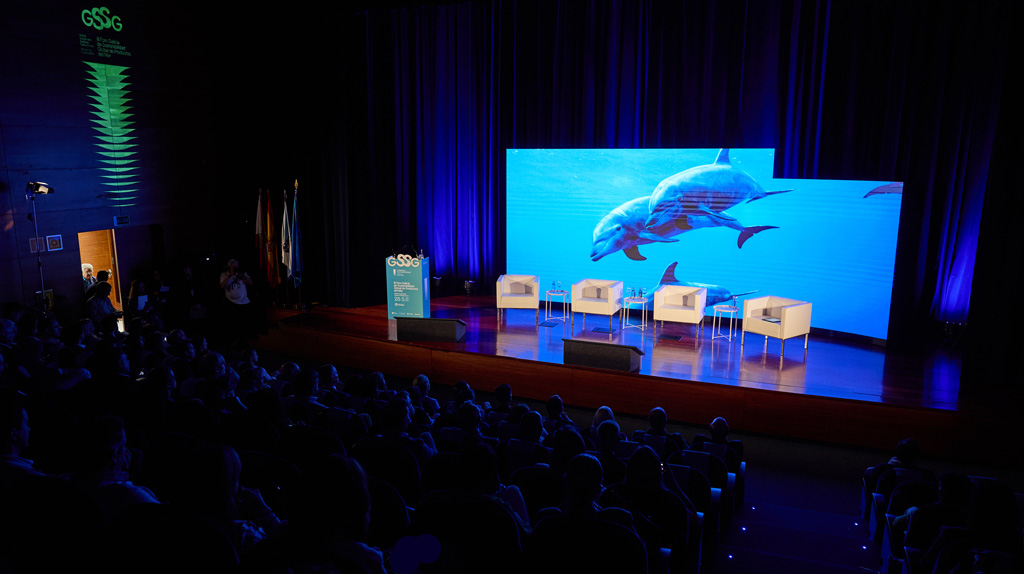
On April 28, eighteen international experts will gather in Vigo to discuss Responsibility and Impact.
The fourth Global Sustainable Seafood Galicia Forum (GSSG) is just around the corner: on April 28, eighteen national and international experts will gather in Vigo to discuss Responsability and impact.
From this perspective, the new event aims to demonstrate how responsible action in the seafood sector, across the entire value chain, creates a positive impact for people and the planet. This fourth edition consolidates the GSSG Forum’s position as a leading international event in the global debate on seafood sustainability.
The forum will be opened by Diana Fernández de la Reguera, an international consultant at the FAO, who will outline the Blue Transformation strategy and detail its roadmap and initial results. Gerbrand Haverkamp, director of the World Benchmarking Alliance (WBA), will close the session by speaking about the impact economy. In between, guest experts will discuss Responsibility and Impact from five different perspectives: certification systems, blue carbon, socio-economic development, waste reduction and Marine Protected Areas – all topics of relevance to the sector
For the fourth consecutive year, Galicia—a leading region in fishing, aquaculture and seafood processing—is consolidating its prominent role in the global dialogue on sustainability. Representatives from institutions, associations, research bodies, NGOs and leading companies in the fisheries and aquaculture sector will share their knowledge and experiences of responsible practices that combine improvement with positive impact.
The Forum is an initiative of the Nueva Pescanova Foundation, supported by the Consellería do Mar (Galician Regional Government), the Nueva Pescanova Group and Abanca
2025 Edition
The third edition of the GSSG Forum, which took place in May 2025 under the theme ‘Measuring Sustainability’, brought together twenty-one international speakers in Vigo and was attended – both in person and online – by 350 registered participants from 30 countries.
The experts discussed how to identify the key parameters – economic, social and environmental – for measuring sustainability, offering different perspectives on the situation, priorities and challenges facing the fisheries and aquaculture sector in measuring sustainability. In addition, best practices, challenges and requirements for standardising and simplifying measurement were identified.